
Seven Puppies' Journey from Crisis to Home
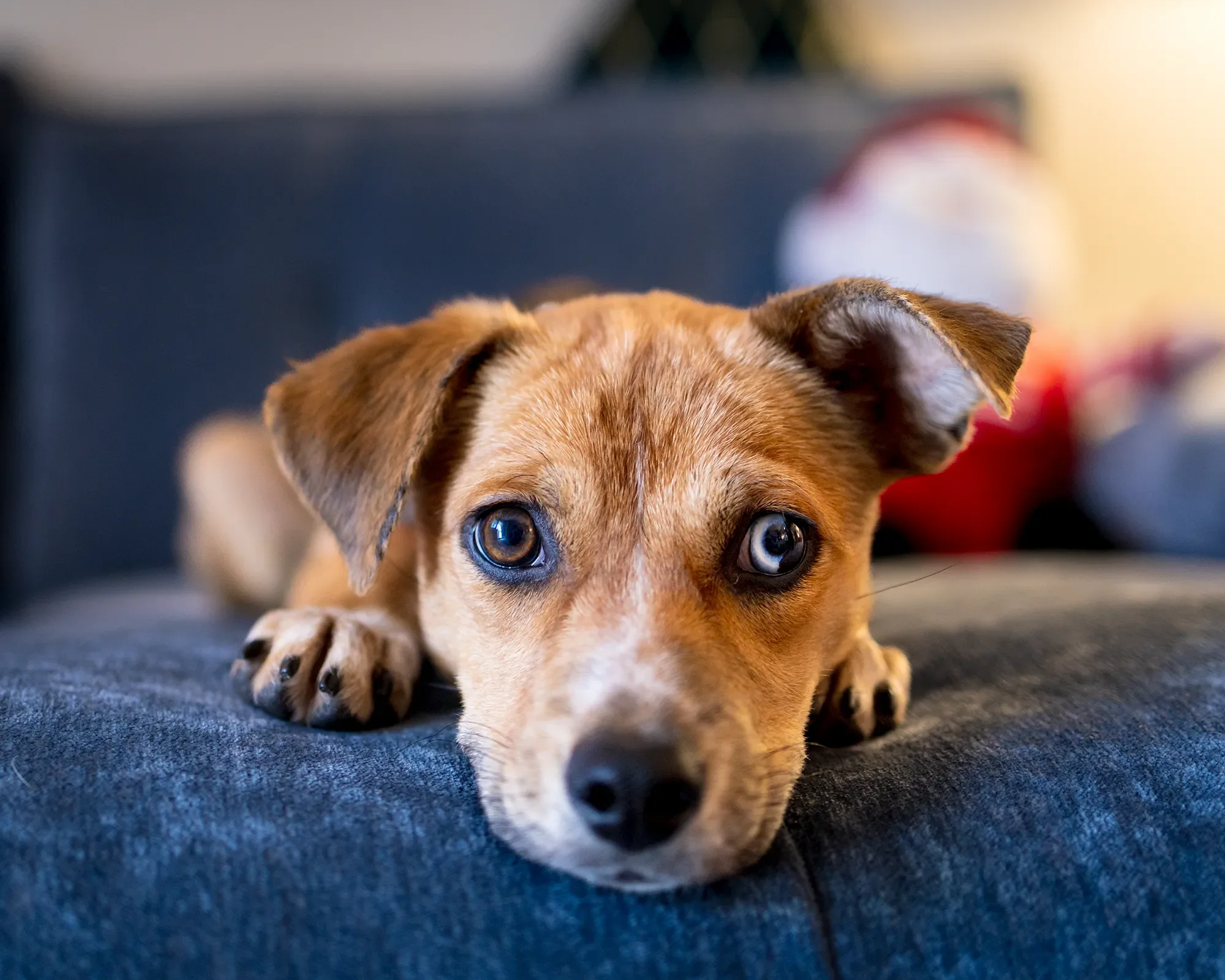
Millie found her happy ending.
A six-week transformation from the Navajo Nation to loving families in Tucson
Late September 2024, seven emaciated puppies arrived at the Humane Society of Southern Arizona, their tiny bodies covered in scabs and sores, so consumed by itching that they had stopped eating. By mid-November, all seven were thriving in their new homes, including one named Millie who has become her owner's constant companion. This is the story of that transformation, and the dedicated people who made it possible.
The Rescue
The morning after these seven puppies arrived at HSSAZ, Dr. Karyn Carlson was giving them medicated baths in the shelter's medical area. As she gently dried the last puppy, she explained what her team had found during their rescue work on the Navajo Nation that weekend.
The puppies had been living in a situation where their caretaker was no longer able to care for them. What made the situation particularly dire: these weren't siblings from a single litter, but seven puppies from different litters born to different female dogs living on the same property. One of the adult dogs was pregnant again.
The puppies were suffering from scabies, a highly contagious parasitic skin condition caused by mites that burrow into the skin, causing such intense itching that puppies often stop eating. Beyond the scabies, the puppies were severely emaciated and likely harboring intestinal parasites. They simply weren't being fed on any regular basis.
The rescue team provided immediate medical intervention: medications for deworming and treatment for the mange. The puppies would need to remain in isolation for about a week while the treatment took effect and they began to put on weight. Only then would they be healthy enough for spay and neuter surgery, and eventually, adoption.
As Dr. Carlson wrapped the last puppy in a towel, she offered a moment of levity to the exhausted little patient: "Do you like my new life? Better not have baths in it." It was a gentle acknowledgment that while the bath was unpleasant, it represented the beginning of something fundamentally better.
This rescue illustrates a crisis that extends far beyond one property. With multiple unspayed females producing litter after litter, and limited resources to care for them, the cycle continues to overwhelm both families and animal welfare organizations. These seven puppies represented not just individual animals in need, but a systemic challenge facing reservation communities and the shelters that serve them.
Three Weeks Later: The Transformation
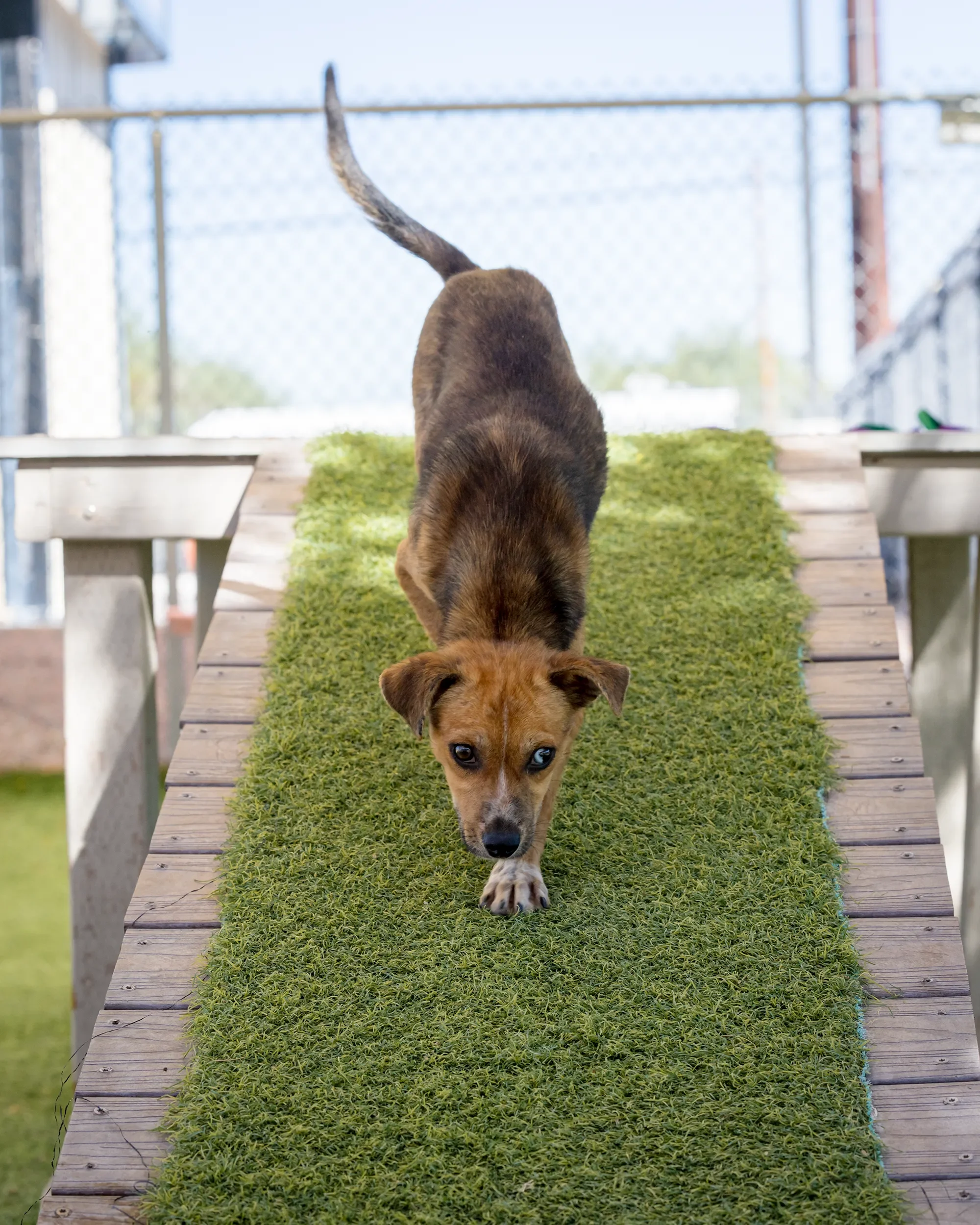
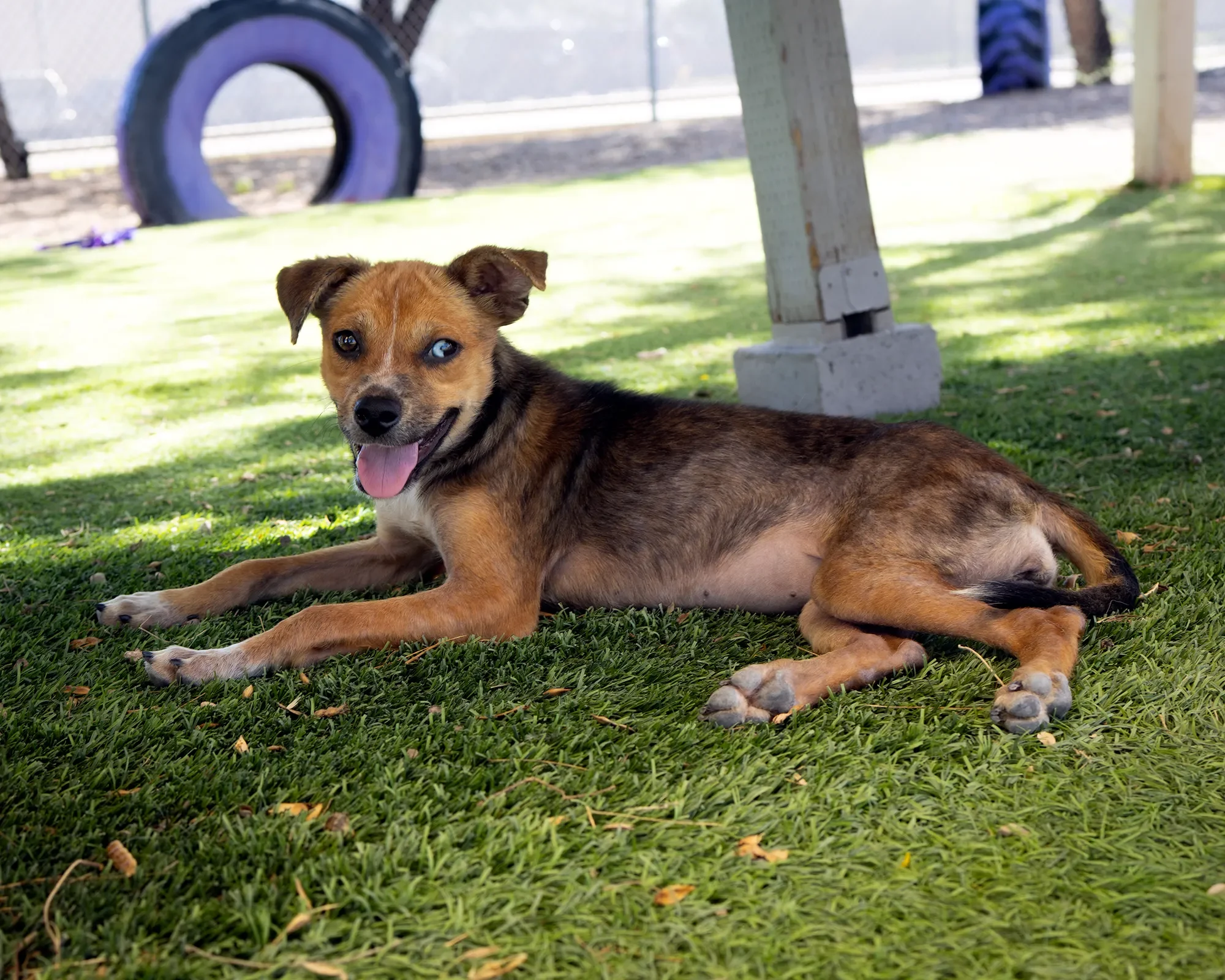
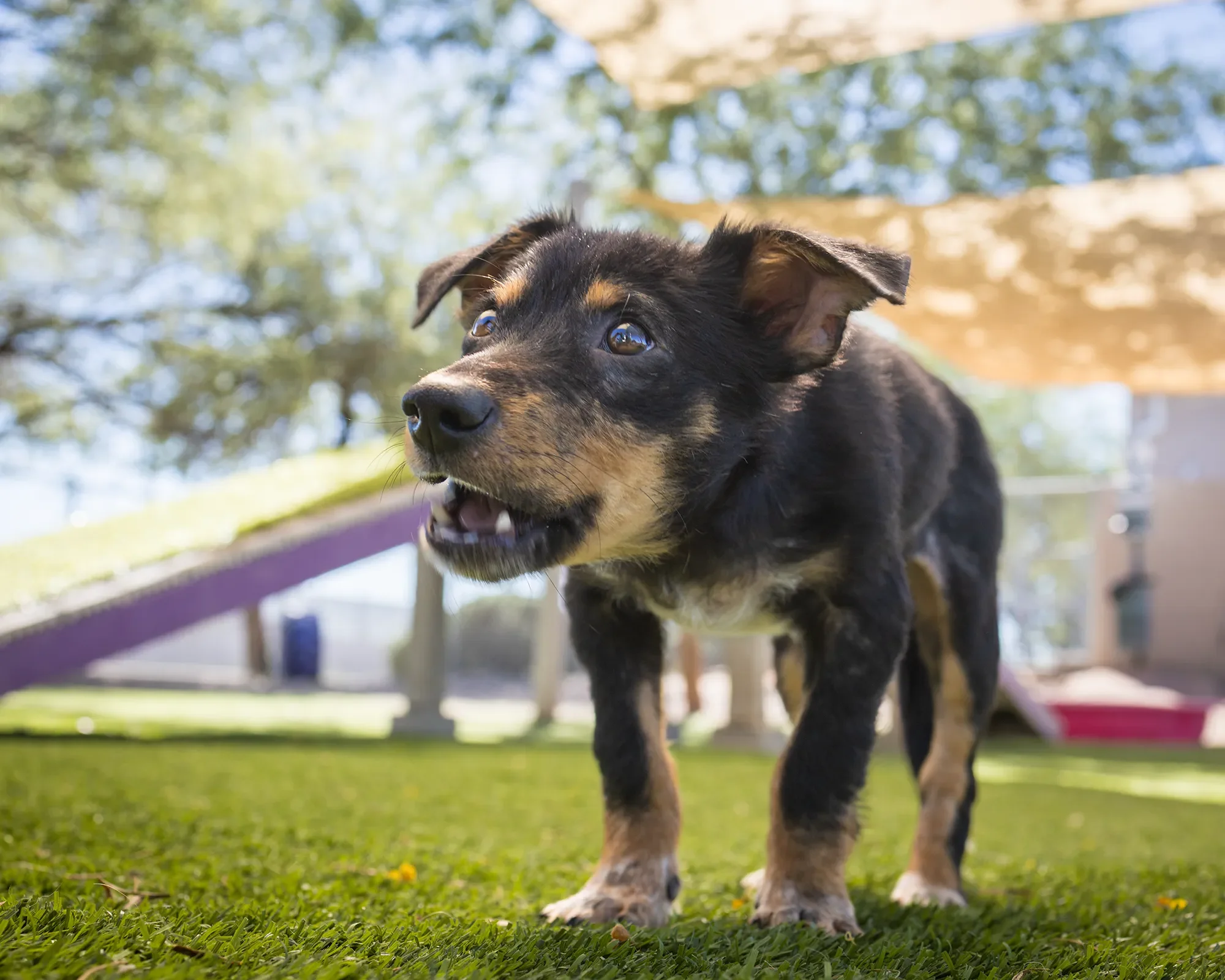
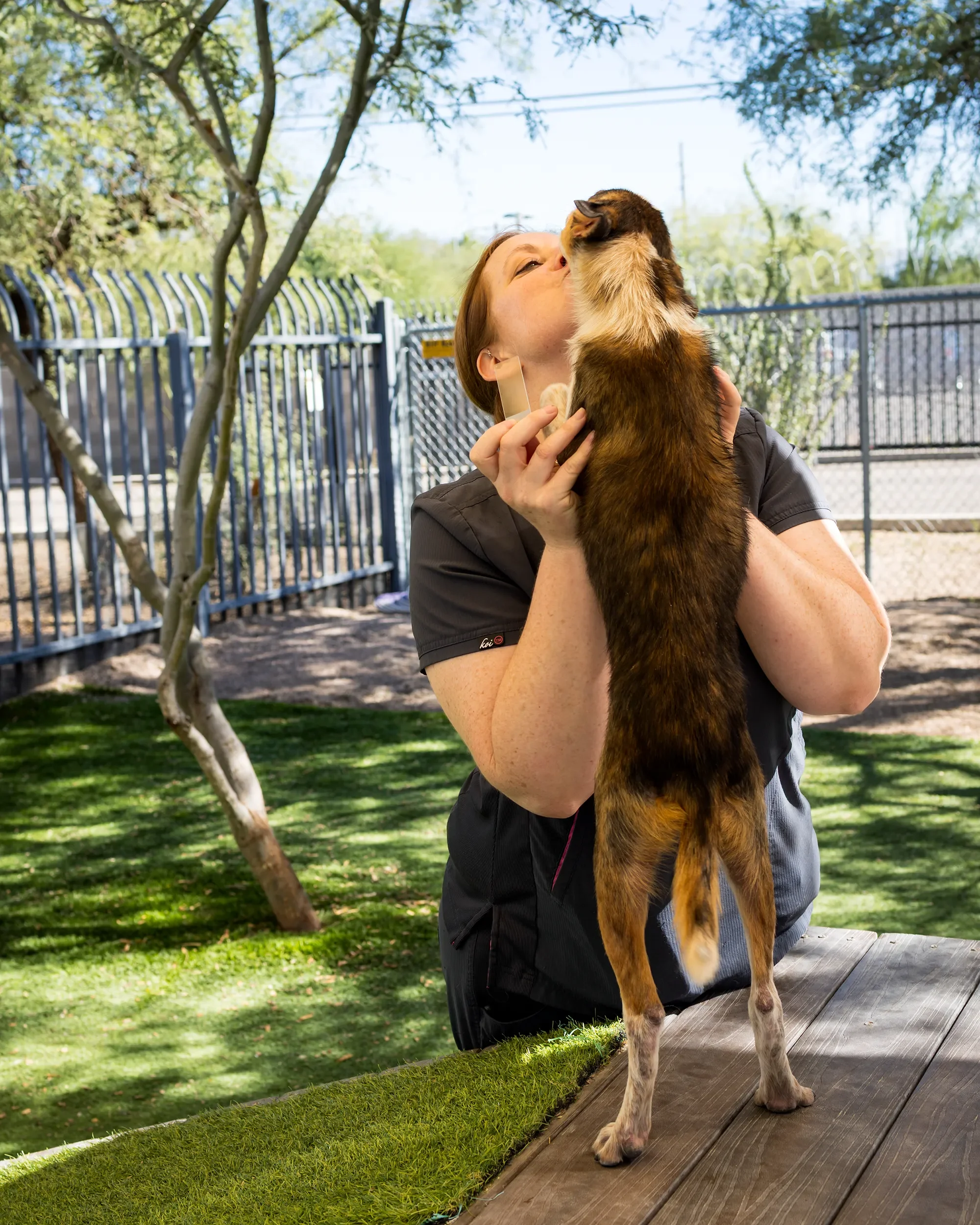
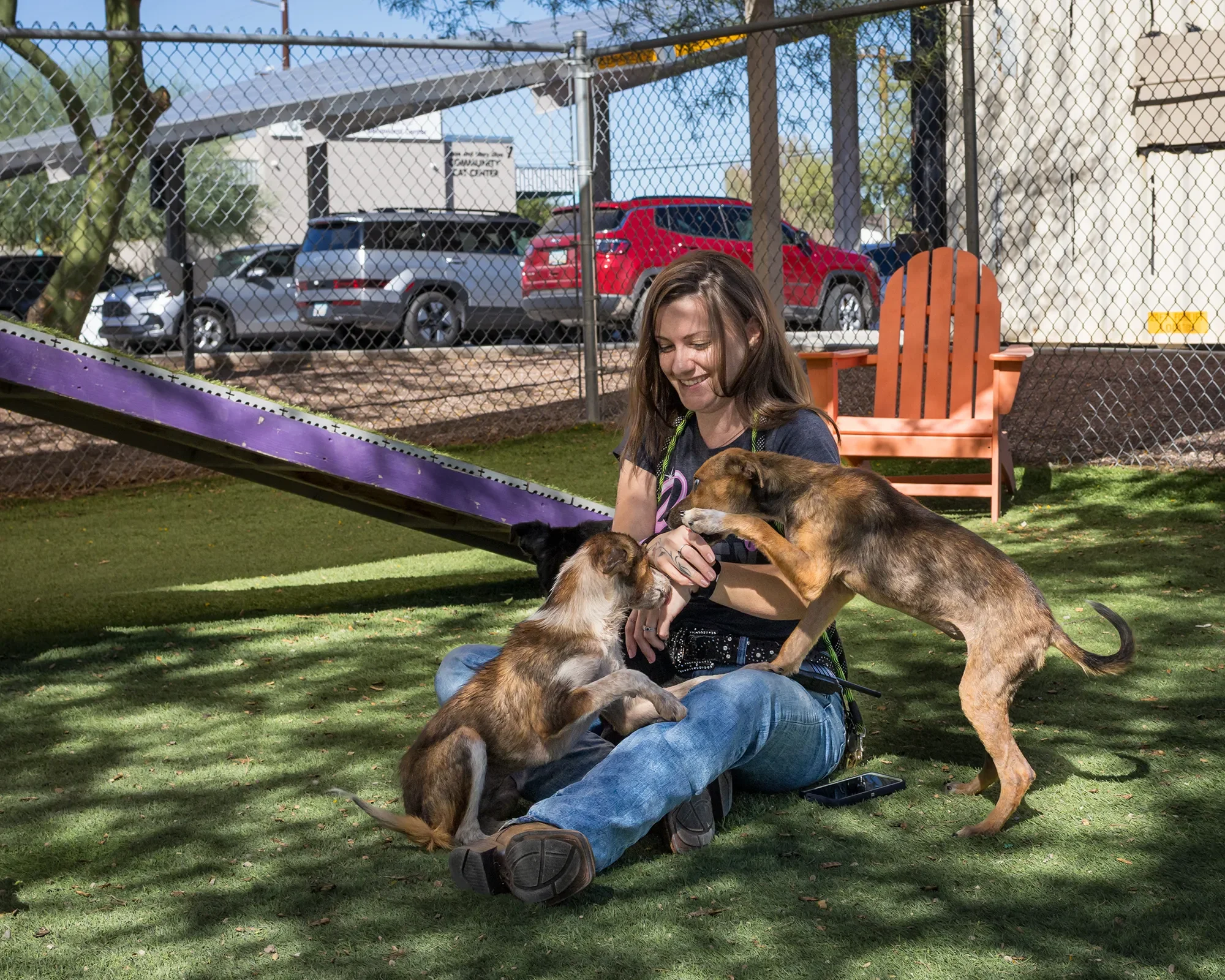
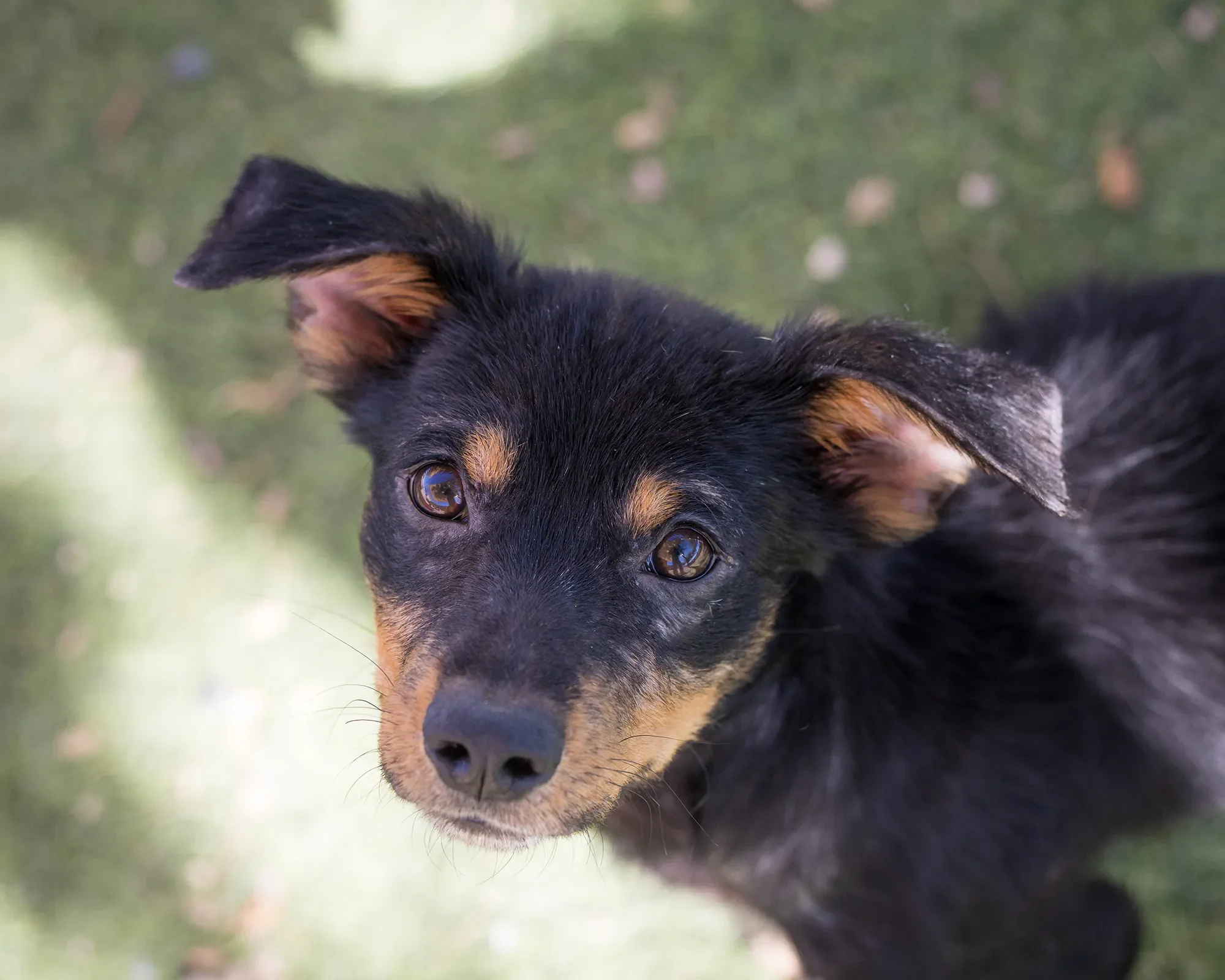
When I arrived at HSSAZ in mid-October to photograph rescue animals available for adoption, I was directed to a play yard where four puppies were romping with boundless energy. These were survivors from Dr. Carlson's rescue, and the transformation was remarkable.
The emaciated, itchy puppies who had been too uncomfortable to eat were now healthy, robust youngsters with shiny coats and bright eyes. They tumbled over each other in play, chased toys, and eagerly approached for attention. Their skin had healed completely. They had gained substantial weight. Most importantly, they were acting like puppies should act: curious, playful, and optimistic about the humans around them.
As part of my work photographing rescue animals for HSSAZ, I've documented countless transformations, but there's something particularly powerful about seeing puppies recover. Their resilience is extraordinary. Just three weeks earlier, these dogs had been struggling to survive. Now they were wrestling with littermates and investigating every corner of the play yard with the confidence of animals who know they're safe.
The puppies had been made available for adoption the previous weekend, and three of the seven had already found homes. The rapid adoptions weren't surprising. Healthy puppies are always in demand, but these dogs represented something beyond just their age and cuteness. They had received excellent medical care, been properly socialized during their shelter stay, and were now spayed or neutered. They represented responsible adoption: animals who had been given everything they needed to succeed in their new homes.
Among the four puppies I photographed that day was one who would soon be known as Millie, though her shelter name was Hopi. She was more reserved than her littermates during our session, showing some wariness of the camera and the photography setup. While the others rushed forward to investigate, Millie held back, observing from a slight distance. It's a common response from puppies who are still processing their new circumstances and learning to trust unfamiliar situations.
These puppies were clearly still recovering. I could see their ribs, and they occasionally paused mid-play to scratch at healing skin. Some were more confident than others in approaching unfamiliar people. But compared to the emaciated, sick puppies Dr. Carlson had bathed three weeks earlier, the progress was undeniable. They had energy to play. They trusted humans enough to take treats from my hand. They were moving like healthy puppies, even if they weren't quite there yet.
Millie's New Life
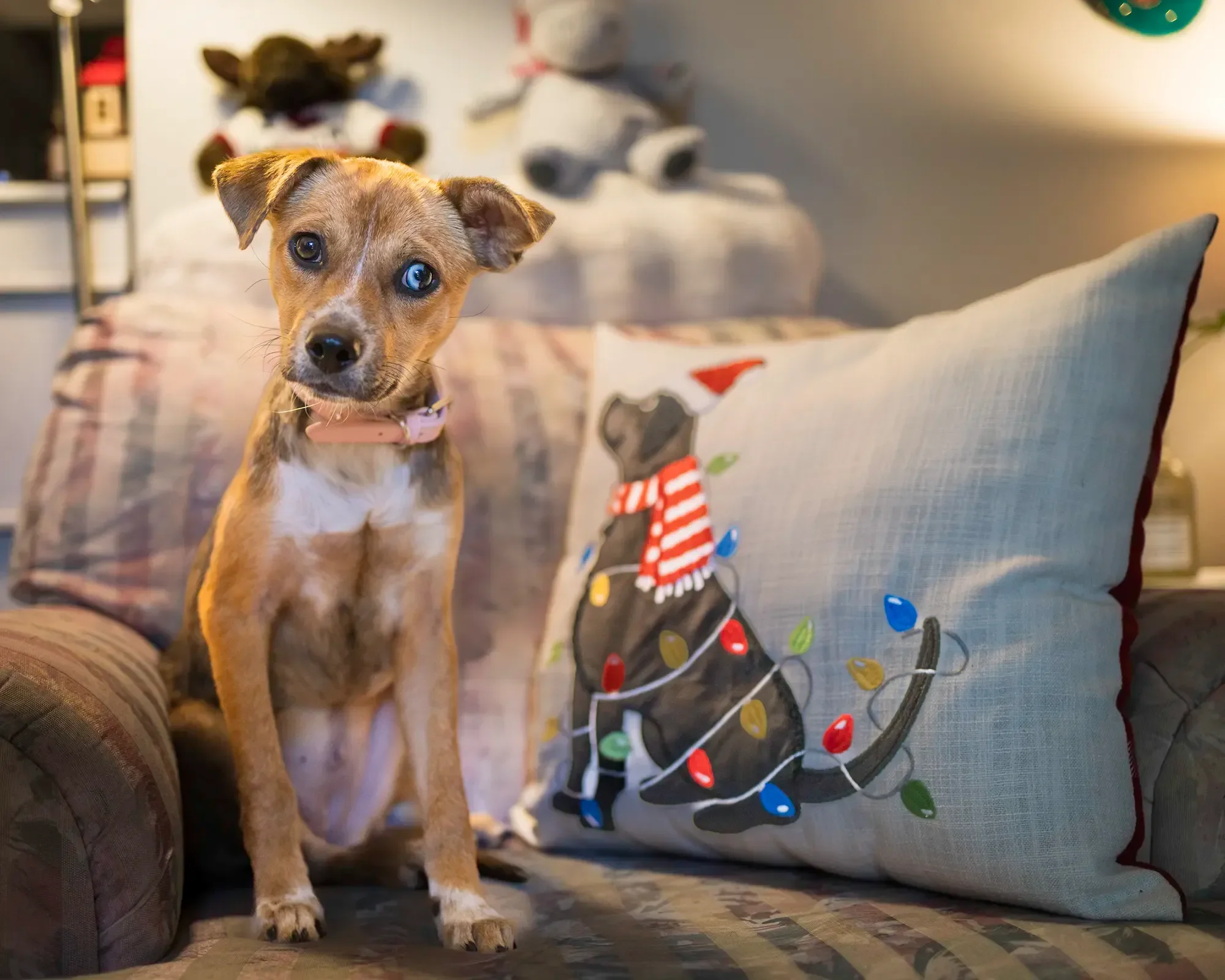
Millie is ready to spend her first Christmas in her forever home.
Within days of our photography session, Hopi was adopted and renamed Millie by her new owner. A few days later, I visited their home to photograph Millie in her new environment. This follow-up session allows adopters to have professional portraits of their new family member and gives me the opportunity to document the happy endings that make shelter work worthwhile.
The difference in Millie's demeanor was striking. The wariness I'd observed at the shelter had completely vanished. She moved through her new home with easy confidence, clearly comfortable in her surroundings and deeply bonded to her owner. During our portrait session, she was relaxed and attentive, engaging with me in ways she hadn't at the shelter. This transformation, from cautious to confident in just a matter of days, illustrated something profound about what a secure home provides.
"Millie has been a wonderful support to me," her owner shared. "The bonus is that she is so loving and wants to be by me all the time. I will take the best care of her."
This mutual benefit, the dog finding security and the human finding companionship, is at the heart of why rescue work matters. Millie wasn't just saved from a dire situation; she's now actively enriching someone's life. The transformation is complete not when a dog leaves the shelter, but when they become integral to their new family.
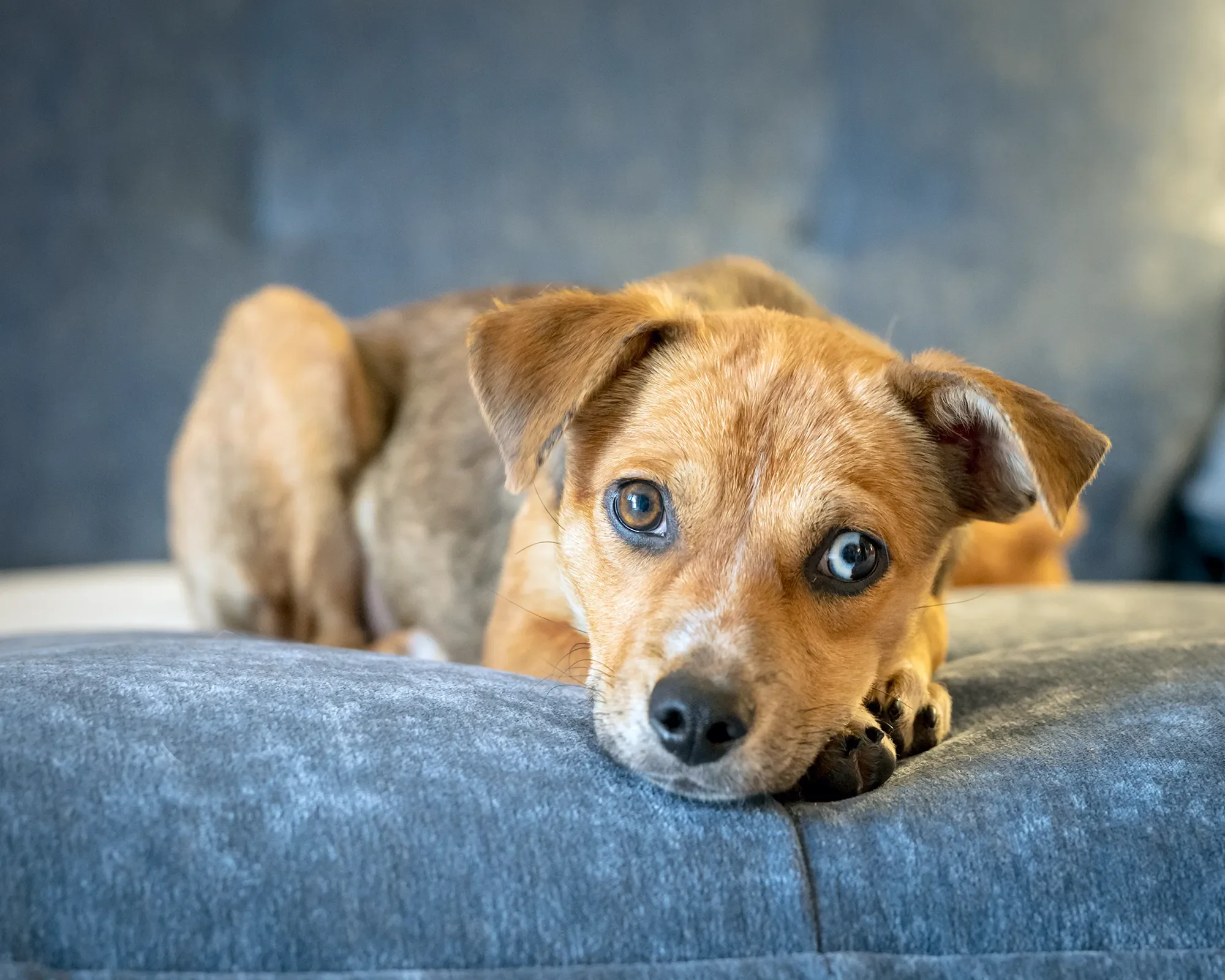
Millie at home.
When I delivered the portraits from our session, Millie's owner's response captured the emotional significance these images hold: "I love them. Thank you. Beautiful pictures of Millie. They are perfect."
Recently, I received an update: "She is growing and a wonderful dog." While it's still early, Millie has been in her new home for only a few weeks, the signs are overwhelmingly positive. She's thriving physically and emotionally, and her owner is deeply committed to her care.
Full Circle
All seven puppies from Dr. Carlson's rescue are now in homes. Unlike their mothers, they've been spayed and neutered, ensuring they'll never contribute to the overwhelming need for shelter space that made their own rescue necessary. This is what breaking the cycle looks like: not just saving individual animals, but preventing the next generation of suffering.
Dr. Carlson's work on the Navajo Nation continues, addressing both immediate crises and long-term solutions through spay/neuter services and community support. Her efforts, and those of veterinarians and rescue workers like her, are essential to reducing the number of animals who end up in situations like these seven puppies faced.
The Humane Society of Southern Arizona made this transformation possible through their medical resources, staff expertise, and commitment to giving every animal the care they need to succeed. But HSSAZ can only continue this work with community support. They need foster families to provide temporary homes for animals recovering from illness or injury. They need adopters willing to open their homes to animals of all ages and backgrounds. And they need financial support to fund the medical care, staff time, and resources required to transform sick, scared animals into healthy, confident companions.
As HSSAZ launches their December fundraising campaign, they're asking the community to invest in more stories like Millie's. More rescues, more recoveries, more happy endings. Every donation directly supports work like Dr. Carlson's reservation outreach, medical treatment for sick animals, and the daily care that transforms shelter dogs into family members.
I photograph rescue animals because I believe in the power of visual storytelling to connect people with animals who need them. Millie's journey from that medicated bath in late September to her comfortable home six weeks later isn't just one dog's story. It's a testament to what's possible when medical expertise, shelter resources, and community support align to give vulnerable animals a second chance.
If you're considering adding a dog to your family, visit HSSAZ to meet the animals currently available for adoption. If you're not ready to adopt, consider fostering or making a financial contribution to support their work. And if you've already adopted, consider supporting the December fundraising campaign that makes rescues like this possible.
Seven puppies. Seven new lives. Seven families enriched. That's the return on investment when we choose to care.
To learn more about adoption, fostering, or supporting the Humane Society of Southern Arizona's work, visit www.hssaz.org. To see more of my rescue animal photography, visit www.tucsonpetphotography.com.
